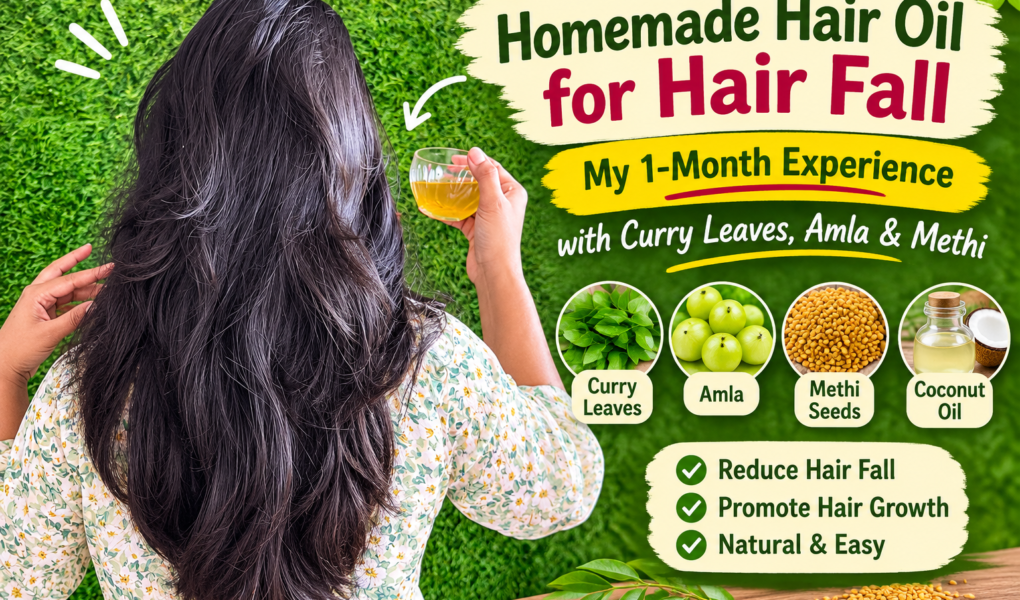
Especially after postpartum hair fall has been one of my biggest hair-care concerns for a long time. I noticed excessive hair shedding and tried different ways to improve my hair-care routine, even though I have used multiple products like hair oil, shampoo , hair serum etc. but I haven’t seen any significant result. Then I decided instead of immediately purchasing another expensive hair product, I decided to try a simple homemade hair oil using natural ingredients that are easily available in our kitchen.
After using this DIY hair oil consistently for around a month, I noticed a visible reduction in my hair fall. Here is everything about my homemade hair oil, the ingredients I used and my personal experience.
Ingredients Used in My Homemade Hair Oil
I prepared this DIY hair oil using only four simple ingredients:
1. Curry Leaves
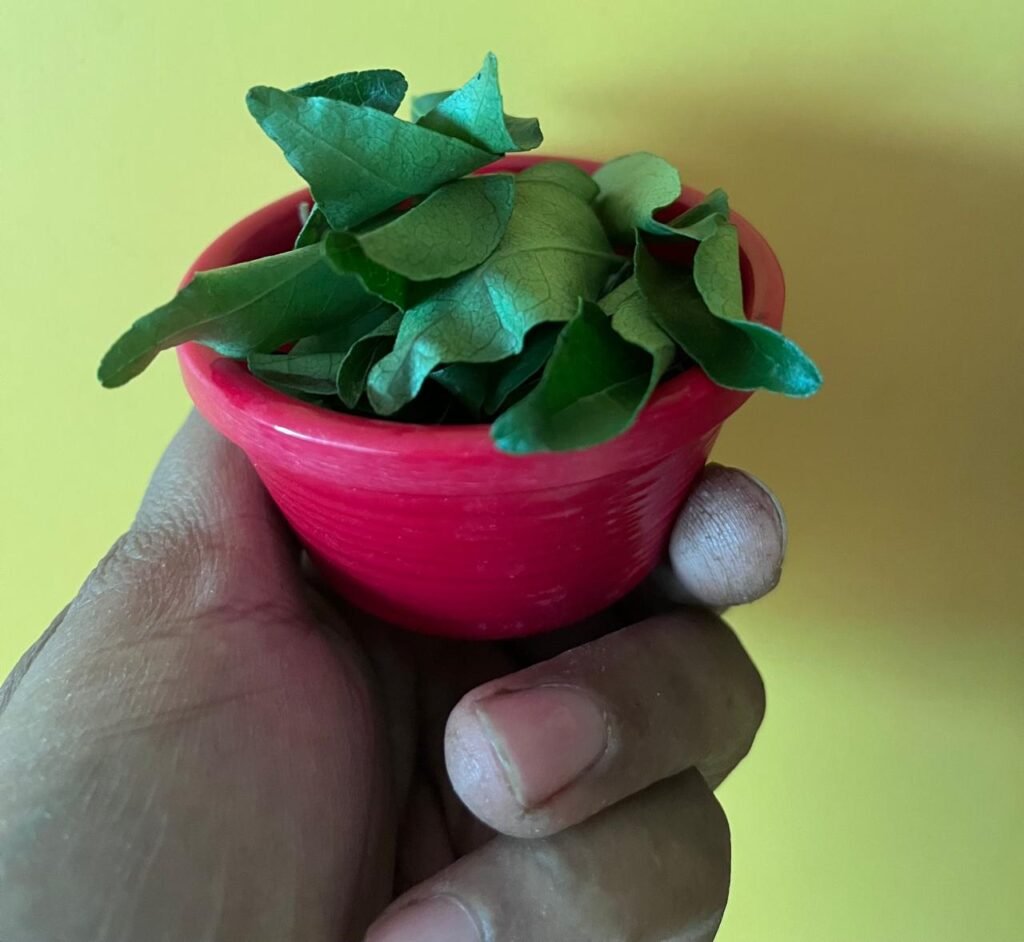
Curry leaves are traditionally used in Indian hair-care routines. They contain plant compounds and antioxidants, making them a popular ingredient in homemade hair-care preparations. I have added a few curry leaves to the oil. If you are allergic to smell do not add excess curry leaves to it.
2. Amla (Indian Gooseberry)
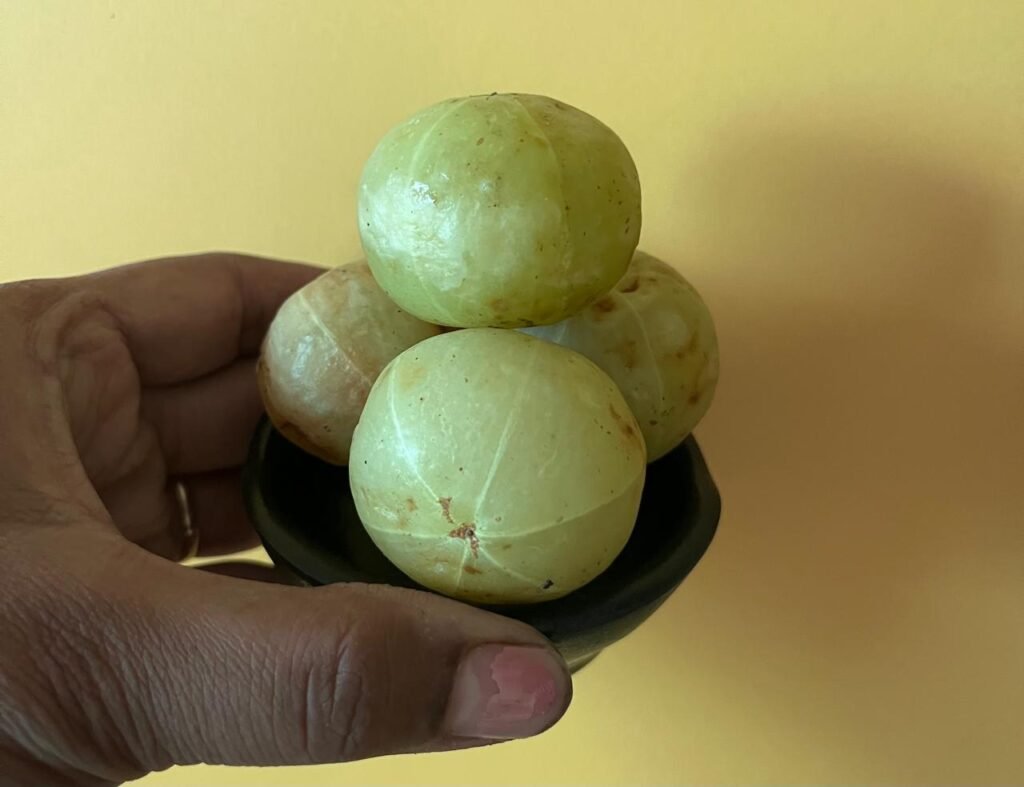
Amla is known for its antioxidant content and is commonly used in traditional hair-care remedies. It is a popular ingredient in homemade hair oils and hair masks. It’s one of my favourite ingredients in oil. It also keeps my scalp away from itchiness and dandruff.
3. Methi Seeds (Fenugreek Seeds)
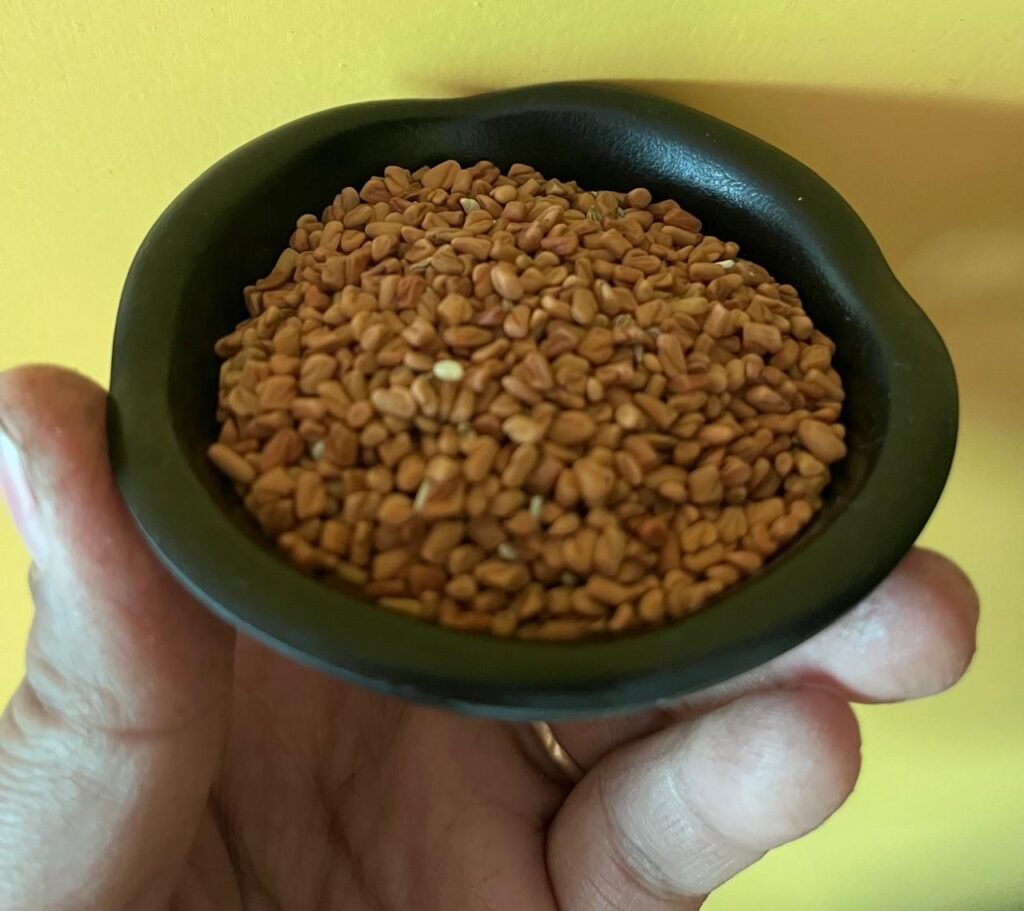
Methi seeds are another traditional hair-care ingredient. They contain plant-based compounds and are often included in homemade hair treatments. I have added a few tablespoons of methi seeds to the oil. Even though we can add powder to it, I recommend adding seeds while boiling the oil.
4. Pure Coconut Oil
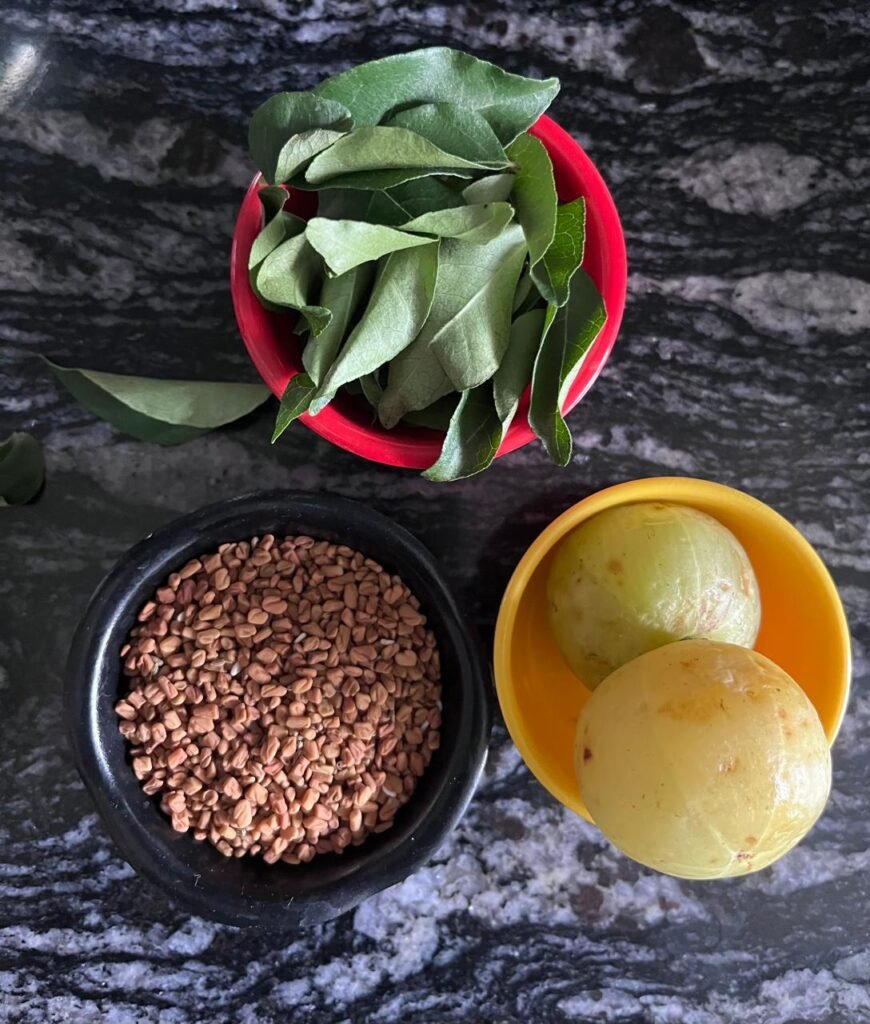
Coconut oil is widely used for hair conditioning. It can help reduce protein loss from hair and improve hair smoothness, making it a useful base for homemade hair oil. It would be even more great to add extracted coconut oil from the coconut shell. As I live in the city I wont get extended oil here so I have used parachute coconut oil for it.
How I Used This DIY Hair Oil
- I combined curry leaves, amla and methi seeds with pure coconut oil to prepare my homemade hair oil.
- With low fame we need to boil all the ingredients until the oil becomes
- Then I turned off the gas , strained the oil and stored it in an airtight container.
- I prepare this oil once a week and apply two twice a week for hair.
- Suggested not to prepare large quantities.
I incorporated this oil into my regular hair-care routine and started applying it once or twice a week.
After applying i gently massaged the oil into my scalp and applied it along the hair lengths. I usually left it on for some time before washing my hair with my regular shampoo.
Consistency was important for me. I continued using it instead of expecting overnight results.
My Honest 1-Month Experience
I had been experiencing hair fall for a long time, so I wanted to try something simple and affordable.
After approximately 15 days, I continued observing how my hair responded to the oil. After using it for around one month, I noticed a visible reduction in my hair shedding.
I was happy with my experience because I could incorporate these easily available ingredients into my regular hair-care routine.
However, this is my personal experience. Results may vary depending on individual hair types and the underlying causes of hair fall. Homemade oils are not proven treatments for every type of hair loss.
Final Thoughts

If you enjoy natural hair-care routines, this DIY coconut oil preparation with curry leaves, amla and methi seeds is worth learning about.
Always do a patch test before applying homemade preparations, and discontinue use if you experience irritation. If you have persistent or excessive hair fall, consider consulting a dermatologist to understand the underlying cause.
Sometimes, simple hair-care routines can be a lovely addition to our self-care journey!


